
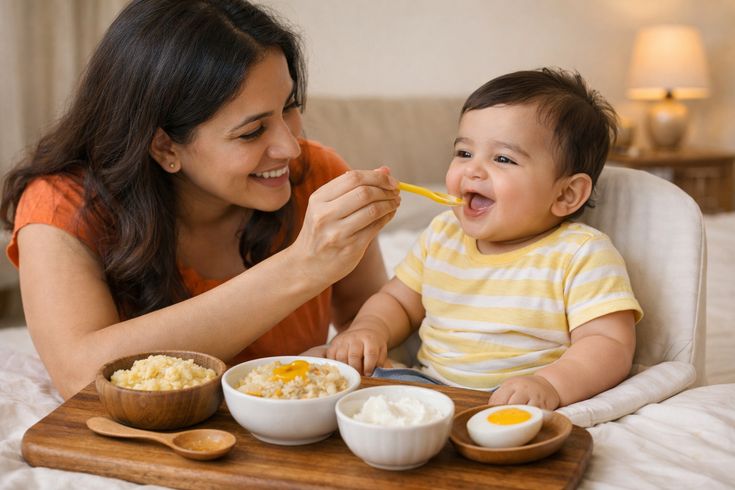
By Cinthia Ortega – Infant Feeding Specialist and Early Childhood Nutrition Consultant
When I became a mother for the first time, I believed feeding my baby would come naturally. After all, feeding seemed like one of the most basic parts of parenting. I assumed that if I offered healthy foods, my baby would eat them. If I followed expert advice, everything would fall into place.
I couldn’t have been more wrong.
Like many first-time moms, I entered motherhood with a mixture of confidence, excitement, and unrealistic expectations. What I didn’t expect was how emotional feeding could become. I didn’t expect to worry about every ounce of milk, every spoonful of puree, or every meal my baby refused.
Looking back now, I realize that most of my feeding struggles were not caused by my baby. They were caused by my own fears, misconceptions, and the pressure I placed on myself.
The good news is that those mistakes taught me valuable lessons that completely changed the way I approached feeding.
If you’re currently struggling with your baby’s eating habits, I hope my experience helps you avoid some of the same mistakes I made.
The first mistake I made was believing that a good mother could control how much her baby ate.
This belief seems harmless at first, but it quickly becomes exhausting.
I constantly monitored every feeding session. I counted ounces. I tracked every bite. I worried if my baby ate less than the day before. If a meal didn’t go well, I felt like I had failed.
What I eventually learned is that parents have far less control over a baby’s appetite than they think.
Healthy babies are naturally capable of regulating their hunger and fullness. Some days they eat more. Other days they eat less. Their needs change constantly based on growth, activity levels, developmental stages, and countless other factors.
Once I stopped trying to control every bite, feeding became much less stressful for both of us.
Another major mistake I made was comparing my baby to other babies.
Social media made this even worse.
Everywhere I looked, I saw babies happily eating colorful meals. Parents shared photos of babies devouring vegetables, trying exotic foods, and finishing entire plates.
Meanwhile, my baby was refusing foods, throwing spoons, and barely eating some days.
I spent far too much time wondering why my baby wasn’t eating like everyone else’s baby.
The reality is that every child is different.
Some babies naturally enjoy food early. Others need more time.
Some babies are adventurous eaters. Others are cautious.
Some babies have large appetites. Others eat smaller amounts.
Comparison only increased my anxiety and made me question my instincts.
One of the most important lessons I learned was that my baby’s feeding journey did not need to look like anyone else’s.
Another feeding mistake I made was introducing too many new foods at once.
I was so excited about starting solids that I wanted my baby to experience everything immediately.
Every day I offered multiple new foods.
One day it was avocado, sweet potato, peas, bananas, and oatmeal.
The next day it was carrots, apples, yogurt, and squash.
Instead of making feeding exciting, I accidentally created confusion.
Babies often benefit from simplicity.
Offering one new food at a time allows them to become familiar with flavors, textures, and smells without feeling overwhelmed.
Once I slowed down and introduced foods more gradually, mealtimes became calmer and more enjoyable.
Perhaps one of my biggest mistakes was becoming emotionally attached to the outcome of every meal.
If my baby ate well, I felt successful.
If my baby refused food, I felt defeated.
My mood depended on how much my baby ate.
This created tremendous pressure.
Babies are incredibly sensitive to the emotions of their caregivers.
Even when I tried to hide my frustration, my baby could sense my stress.
Meals became tense.
Instead of focusing on connection and exploration, I focused only on results.
Everything changed when I shifted my perspective.
I stopped measuring success by the amount of food consumed.
Instead, I measured success by whether mealtime was positive and pressure-free.
This simple mindset shift transformed our feeding relationship.
Another mistake I made was offering food too frequently.
Like many new moms, I worried constantly about hunger.
Any time my baby became fussy, I assumed hunger was the cause.
As a result, I offered milk, snacks, or food throughout the day.
What I didn’t realize was that my baby rarely had an opportunity to become genuinely hungry.
Without hunger, interest in meals naturally decreased.
Once I established more predictable feeding times and allowed appropriate gaps between meals, my baby’s appetite improved significantly.
I also made the mistake of expecting immediate acceptance of new foods.
If my baby rejected something once, I assumed they disliked it.
I would often remove that food from our rotation entirely.
What I later learned is that food acceptance takes time.
Babies frequently need repeated exposure before they become comfortable with a new food.
A single rejection does not mean a baby dislikes a food forever.
In fact, some of my baby’s favorite foods today were initially rejected several times.
Patience proved to be one of the most powerful feeding tools I ever discovered.
One mistake that many first-time parents make is using distractions during meals.
I certainly did.
When my baby refused food, I tried everything.
I sang songs.
I made funny faces.
I played videos.
I waved toys around.
Anything to get one more bite into my baby’s mouth.
While these tactics sometimes worked temporarily, they prevented my baby from paying attention to hunger and fullness cues.
Eating became connected to distraction rather than awareness.
Eventually, I learned that calm, focused meals were far more beneficial than entertaining my baby through every feeding session.
I also underestimated the impact of sleep on feeding.
When my baby was overtired, eating became much more difficult.
Meals that normally went smoothly suddenly became battles.
My baby was fussier, less patient, and less interested in food.
At first, I didn’t connect these challenges to sleep.
I thought feeding and sleep were separate issues.
In reality, they are deeply connected.
A well-rested baby is often more receptive to eating than an exhausted one.
Improving sleep routines had a surprisingly positive effect on feeding.
Another mistake I made was worrying excessively about short-term intake.
If my baby ate very little at breakfast, I immediately became concerned.
If lunch wasn’t perfect, I worried about nutritional deficiencies.
I focused so much on individual meals that I lost sight of the bigger picture.
What truly matters is overall intake over days and weeks.
Healthy eating patterns are built gradually.
One skipped meal rarely causes problems.
One picky day is usually not significant.
Looking at feeding from a long-term perspective helped reduce much of my anxiety.
I also made the mistake of assuming that healthy eating meant perfect eating.
I believed every meal needed to be perfectly balanced.
Every plate needed vegetables, protein, healthy fats, and fruits.
While balanced nutrition is important, perfection is unrealistic.
Some days are easier than others.
Some meals are more successful than others.
Flexibility is essential.
Once I allowed myself to be less rigid, feeding became much more sustainable.
One particularly challenging mistake involved reacting too strongly to food refusal.
Whenever my baby refused a meal, I immediately offered alternatives.
If vegetables were rejected, I offered fruit.
If fruit was rejected, I offered yogurt.
If yogurt was rejected, I tried crackers.
Without realizing it, I was teaching my baby that refusing one food would lead to another option.
Over time, this made feeding even more complicated.
I eventually learned that consistency is important.
Offering a balanced meal and allowing the child to decide how much to eat often works better than continuously replacing foods.
Another lesson came from allowing my baby to make a mess.
Initially, I hated messy eating.
Food ended up everywhere.
The floor, the highchair, the clothes, and sometimes even the walls.
My instinct was to prevent the mess.
I wanted feeding to be clean and efficient.
But babies learn through exploration.
Touching, squishing, smelling, and examining food are important parts of the learning process.
When I stopped worrying so much about cleanliness, my baby became more comfortable interacting with food.
That comfort eventually translated into more eating.
I also learned that appetite naturally fluctuates during different developmental stages.
During growth spurts, my baby seemed hungry constantly.
During teething episodes, appetite often decreased dramatically.
During periods of developmental change, eating patterns shifted unexpectedly.
At first, these fluctuations worried me.
Eventually, I understood that changing appetites are a normal part of childhood.
One mistake that surprised me was taking feeding challenges personally.
When my baby refused a meal I had carefully prepared, I felt rejected.
I interpreted food refusal as criticism of my efforts.
But babies are not evaluating our cooking.
They are simply responding to their own developmental needs, preferences, and hunger levels.
Separating my emotions from my baby’s eating behavior helped me approach feeding with more confidence and less frustration.
As time passed, I discovered that feeding is about far more than nutrition.
It is about trust.
It is about connection.
It is about helping a child build a healthy relationship with food that may last a lifetime.
That relationship cannot thrive in an environment filled with pressure, fear, or anxiety.
It grows through patience, consistency, and respect.
Today, when parents ask me about feeding challenges, I often tell them that the goal is not to create a perfect eater.
The goal is to create a positive feeding environment.
Children who feel safe, supported, and respected during meals are more likely to develop healthy eating habits over time.
Looking back, I don’t regret being concerned about my baby’s nutrition. Concern is a natural part of parenting.
What I regret is allowing fear to steal so much joy from our feeding journey.
I spent too much time worrying about what might happen and not enough time appreciating the progress we were already making.
If I could speak to my younger self, I would say this:
Trust your baby more.
Trust yourself more.
Stop comparing.
Stop counting every bite.
Stop chasing perfection.
Focus on connection.
Focus on consistency.
Focus on creating positive experiences around food.
The rest will come.
Feeding a baby is rarely as simple as we imagine before becoming parents.
There will be challenges, surprises, setbacks, and victories.
There will be meals that go wonderfully and meals that seem impossible.
But with patience, flexibility, and realistic expectations, feeding can become one of the most rewarding parts of parenting.
The mistakes I made as a first-time mom taught me lessons I now share with families every day.
And perhaps the most important lesson of all is this:
A successful feeding journey is not measured by how much a baby eats at any single meal. It is measured by the trust, confidence, and healthy relationship with food that develops over time.
Cinthia Ortega
Infant Feeding Specialist and Early Childhood Nutrition Consultant
Helping parents build confident, stress-free feeding relationships from the very beginning.